Making Tax Digital applies to all VAT registered businesses from April 2022. Are you ready? By Michael Ball, Streets Chartered Accountants

Michael Ball, tax director at Streets Chartered Accountants, dives into Making Tax Digital. Since April 2019 most VAT registered businesses with a turnover over £85,000 have been within Making Tax Digital (MTD) for VAT. This means that they have had to keep digital records and submit their tax returns via MTD compatible software. From April 2022 MTD for VAT is being extended to all VAT registered businesses. In practical terms this means that they will no longer be able to submit their VAT returns via the old HMRC portal.

What are the requirements?

As already referenced, under MTD a business must keep digital records, but what does that mean? As the name suggests your business records need to be kept in a digital format, so manual records will no longer be allowed and the records must include the following details:
  • your business name, address, and VAT registration number
  • any VAT accounting schemes you use
  • the VAT on goods and services you supply
  • the VAT on goods and services you receive
  • any adjustments you make to a return
  • the ‘time of supply’ and ‘value of supply’ for everything you buy and sell
  • the rate of VAT charged on goods and services you supply
  • reverse charge transactions – where you record the VAT on both the sale price and the purchase price of goods and services you buy
  • your total daily gross takings if you use a retail scheme
  • items you can reclaim VAT on if you use the Flat Rate Scheme
A further requirement is that there is a fully digital journey from the records to the submission of the VAT return. The simplest way to achieve this is to keep your records in ‘Functional compatible software’, that is software that can not only keep your records but also can provide and receive information to HMRC directly. If your records are not kept in such software, for example if you use a spreadsheet, then bridging software can be used to make the submission but there must be a digital link between the software. Similarly, if a set of programs are used, there must be a digital link between the pieces of software. There are a number of options available for software solutions and a list of compatible software is provided on the HMRC website at https://www.gov.uk/guidance/find-software-thats-compatible-with-making-tax-digital-for-vat However, if you have any questions or concerns regarding MTD for VAT or would like to talk over your business and the software options that might work for you then please do get in touch by emailing mtd@streetsweb.co.uk   See this column in the April edition of East Midlands Business Link Magazine.

Howes Percival delivers £300m of corporate deals in Q1

0
Howes Percival’s corporate, commercial, and banking (CCB) team has seen a strong start to the year, completing 37 deals with a combined value of just over £299.5 million in Q1. The large volume of completed deals at the start of 2022 is a result of ongoing high levels of M&A, financing and restructuring activity. Since the beginning of the year, the team have advised on a substantial pipeline of transactions for owner-managed businesses, including:
  • Advising on the management buyout of Blue Alligator Company,
  • Advising Bright Star Financial Limited on a share buyback of Omni Equity Partners LLC’s shares,
  • Advising the shareholders of Cave and Sons Investments on a partial sale to Macintyre Hudson.
Andy Harris, partner, and head of Howes Percival’s CCB team, said: “We’ve had an incredibly strong start to 2022. We’re reaping the rewards of a concerted focus on recruitment into the team and increasing our capacity. We’ve been able to promote some really good people, alongside bringing in top lawyers, who have decided to develop their career with us. “Our growing reputation has enabled us to attract talent from much larger law firms – specialists who are known experts in their field – and our clients have reacted very positively to their arrival. We’ve been able to add a further seven hires since the summer, building on the 50% growth we’ve had in the team since 2019. “The sheer variety of the transactions has been very interesting – we’ve seen a lot of activity across all of our sector specialisms, with deals ranging in value from £50,000 to over £100 million, and the depth and balance we now have at all levels in the team means we can always provide a cost-effective solution, whatever the deal size.” Recent high-profile recruits include senior partner and head of commercial, Paula Dumbill, from Browne Jacobson, and corporate and venture capital specialist, Tom Redman from Dentons. Andy Harris continued: “The war in the Ukraine and spiralling energy costs are giving everyone pause for thought, and we will all have to see how things are the other side of the summer, and the effects on consumers who will have less spare cash. But at the moment our pipeline remains strong, and the after-effects of the pandemic are continuing to fuel activity. “The increased reliance on technology over the past two years is here to stay as the demand for innovation and automation continues. Similarly, while supply challenges are impacting manufacturers at the various points in the automotive supply chain, a lot of our motor dealer clients had a very good 2021, with pent up demand for new cars. With our focus spread across different sectors we often see a tapering off in activity in some areas, offset by an increase in others. The healthcare sector is one that is proving resilient to most economic curveballs.” Howes Percival has offices in Leicester and Northampton.

Environmental company appoints new consultancy manager

0
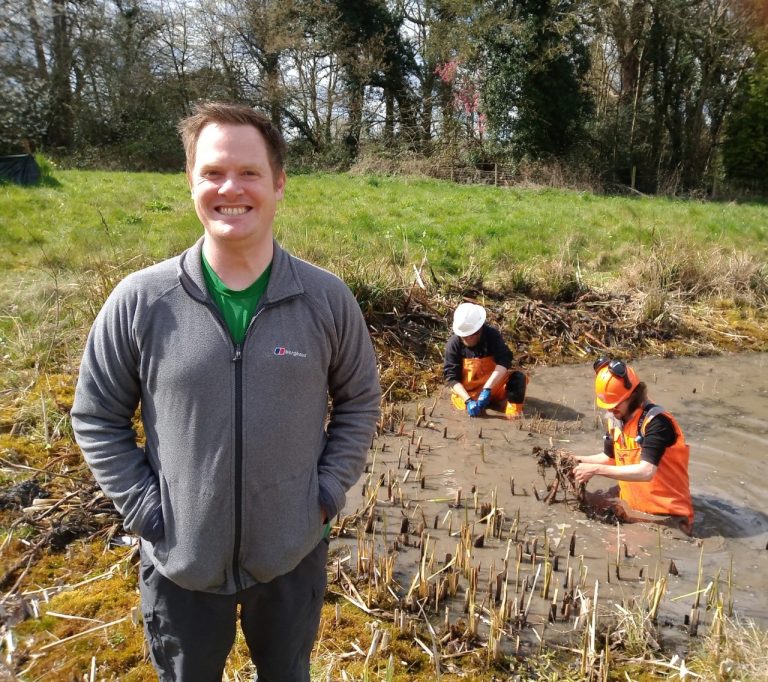
East Midlands Environmental Consultants (EMEC) has appointed Dr Edward Tripp as its new consultancy manager. Ed, who lives in Long Eaton, is highly qualified and joins from Nottinghamshire Wildlife Trust (NWT). In his new role, Ed will be leading a highly qualified, knowledgeable and enthusiastic team of land management consultants, ecologists and project managers. Established in 1991, EMEC provides services to developers, planners, architects, power and extraction industries, utility companies, local authorities, government agencies and private individuals. Work ranges from major nationally impactful contracts and large-scale ecological assessments for housing and industry, through to management planning, habitat management, protected species surveys and habitat surveys of small-scale developments. Ed has a background in ecology, and a passion for conservation. He has volunteered within the conservation sector since he was 18 and his first role began as a part time Education Officer in 2012. Latterly he was managing Nottinghamshire Wildlife Trust Trading Ltd, which generates income for the charity from revenues received through business relationships, catering and retail functions, events and engagement. Ed’s qualifications include a BSc (Hons) Geography, PgC Geographical Information Systems, MSc Botanical Conservation and a PhD in Heathland Ecology. Commenting on his new role, Ed said: “I am committed to helping nature to recover, tackling the ecological and climate crises. My business management and ecology background will help me to lead the teams at EMEC to generate profit to gift to NWT. I also hope to ensure EMEC aspires to achieve at least 10% biodiversity net gain through our work with clients. I’m really excited to have this opportunity to lead the team to many successes and achievements.” In his spare time Ed loves hiking with his partner and two rescue dogs. He also enjoys playing hideously complicated board games, or relaxing with a good book. He is also passionate about classical music, and volunteers with Nottingham Royal Concert Hall, helping them to bring classical music to new audiences. He also has a particular interest in plants, lichens, bryophytes and fungi. As a passionate nature lover, amongst other things, Ed has spent many years volunteering for various organisations and has sat for days in all weathers watching peregrine nests to protect them against persecution. He has monitored nightjars in Sherwood Forest to help them to recover from habitat loss. Helped children to learn about sustainable food production at National Trust houses, planted trees, built fences, cleared balsam and helped to manage heathland. EMEC is one of 24 Wildlife Trust Consultancies that gift aid all of profits to a local Wildlife Trust to ensure positive conservation outcomes and support the recovery of nature across their counties.

Dip in confidence for financial services firms

0
Sentiment among financial services firms fell at the quickest pace since September 2019, according to the latest CBI/PwC Financial Services Survey. Despite declining optimism, the survey of 81 financial services firms – conducted between 1 March and 22 March – found that business volumes had continued to grow in the three months to March, albeit at a slower pace than the previous quarter. Firms expect volumes to be flat in the quarter ahead. The survey also saw a significant slowing in profitability growth on the previous quarter, with firms anticipating a modest decline in the next three months. The outlook for investment in the year ahead continues to present a mixed picture. Firms expect to continue investing in IT but are looking to cut back capital expenditures on land & buildings and vehicles, plant & machinery. Uncertainty over demand (37%), inadequate return on investment (32%) and labour shortages (16%) were cited by firms as the biggest constraints on investment. However, the share of firms citing labour shortages as a factor likely to limit future investment (16%) dropped significantly from last quarter (31%). Building operational resilience emerged as a key theme throughout the survey, with 92% citing this as the key priority for future business strategy and transformation plans. Firms separately identified ‘responding to new cyber threats’ (81%) and ‘improving detection of cyber breaches’ (71%) as the main priorities to improve cyber resilience and reduce tech risk. Elsewhere, headcount across the FS sector was broadly unchanged for the third quarter in a row. Expectations are for a significant uptick in employment next quarter. Rain Newton-Smith, CBI chief economist, said: “While business volumes and profitability held up against the headwinds buffeting the economy, global inflationary pressures and increased geopolitical uncertainty stemming from war in Ukraine have started to take a toll on business confidence. “With operational resilience becoming an ever more important priority for the sector, there is danger that a ‘wait and see’ approach may dampen growth prospects for the wider economy. “A lack of preparedness for mainstream use of digital currencies and challenges in developing Net Zero plans suggest a need for swifter policy development in both areas to guide and stimulate industry-wide action.” Isabelle Jenkins, head of Financial Services at PwC UK, said: “Financial services organisations are right to be careful and cautious as their resilience is once again put to the test. “As the cost-of-living crisis mounts for households, it’s likely that we may see an increase in non-performing loans, another challenge financial services firms will have to respond to ensure consumers are supported through this difficult time. “Despite some investment plans reined in for now, this is not the time to batten down the hatches completely, rather firms should continue to look at how they can best use the insight they are gathering to respond quickly and decisively in changing market conditions.”

Retail sales slow as confidence wanes, says experts

The retail sector has been through a great deal of late and the pandemic has meant much of retail bounced between being open and closed, significantly impacting sales and changing consumer behaviours.

In March 2020, non-essential retail stores began to close, pushing many consumers to buy goods online. In this context, while all comparisons are provided on a year-on-year (YoY) basis, those focused on online/in-store have also been compared with March 2019 (Yo3Y). This will be clearly signposted below.

Sales figures are not adjusted for inflation. Given that both the March SPI (BRC) and February CPI (ONS) show inflation running at historically high levels, a portion of the sales growth will be a reflection of rising prices rather than increased volumes.

Covering the five weeks 27 February – 2 April 2022

  • On a Total basis, sales increased by 3.1% in March, against an increase of 13.9% in March 2021. This is worse than the 3-month average growth of 6.9% and the 12-month average growth of 10.3%.
    • On a three-year basis, Total retail sales grew 5.4% (Yo3Y) during March compared with the same month in 2019.
  • UK retail sales decreased 0.4% on a Like-for-like basis from March 2021, when they had increased 20.3%. This was worse than the 3-month average growth of 3.2% and the 12-month average growth of 6.5%.
  • Over the three months to March, Food sales decreased 2.6% on a Total basis and decreased 3.1% on a Like-for-like basis. This is below than the 12-month Total average growth of 0.8%. For the single month of March, Food was in decline year-on-year.
  • Over the three-months to March, Non-Food retail sales increased by 14.9% on a Total basis and by 8.6% on a Like-for-like basis. This is worse than the 12-month Total average growth of 18.3%. For the single month of March, Non-Food was in growth year-on-year.
  • Over the three months to March, In-Store sales of Non-Food items grew 92.9% on a Total basis and 74.9% on a Like-for-like basis. This was an improvement on the Total 12-month average growth of 69.9%.
    • On a three-year comparison, over the three months to March, In-Store sales of Non-Food items declined 18.2% (Yo3Y) on a Total basis and 3.9% (Yo3Y) on a Like-for-like basis since March 2019.
  • Online Non-Food sales decreased by 29.0% during March, compared with growth of 64.7% in March 2021. This is worse than the 3-month decline of 27.3%.
    • On a three-year comparison, Online Non-Food sales increased by 38.9% (Yo3Y) in March. This is broadly in line with the 3-mth average increase of 38.8%.
  • Non-Food Online penetration rate decreased to 38.5% in March from 63.0% in March 2021. However, it was up 9.2 percentage points on the 29.3% seen at the same point in 2019.

Helen Dickinson OBE, Chief Executive | British Retail Consortium says:“As consumer confidence continued to sink, March saw sales slow, and while spend remained above last year this likely reflects higher prices. Beauty and fashion items were popular last month, as consumers took to their town and city centres for some retail therapy in the run up to Mother’s Day. While it is promising to see experiential shopping back in fashion, much in-store retail has not recovered to its pre-pandemic level. Online sales also decreased compared to last year but remain well above 2019 levels due to investment by retailers in their digital offer.

“The rising cost-of-living and the ongoing war in Ukraine has shaken consumer confidence, with expectations of people’s personal finances over the next 12 months reaching depths not seen since the 2008 financial crisis. Furthermore, households are yet to feel the full impact of the recent rise in energy prices and national insurance changes. There is also potential for further supply chain disruption, with China putting key manufacturing and port cities into lockdown. Ultimately, consumers face an enormous challenge this year, and this is likely to be reflected in retail spend in the future.”

Don Williams, Retail Partner, KPMG adds:“Growth on the high street continued last month with total sales up 3.1% compared to March 2021, driven by a strong performance across most non-food categories. However, the drag came from food sales which were down 6.1%, potentially due to the timing of Easter in 2021 and compounded  by the impact of the lockdown in March last year.

“Online sales fell across all categories compared to March 2021, but penetration rates remain high confirming the “locked in step up” in online purchasing.  This continues to force retailers to focus on finding the most effective mix between physical and online retailing.

“Sales growth in March rose at the slowest rate so far this year, suggesting clouds on the horizon as household budgets come under pressure from rising costs, an increasing tax burden and competition from holidays. There is concern on what this could mean for consumer confidence and the impact on discretionary spend.   Additionally, retailers are facing their own battle with rising costs and inflation, and are walking a tightrope between absorbing rising costs themselves or passing these on to consumers, when competition for share of a shrinking wallet is increasingly fierce. The best retailers will continue to balance attention on areas that can yield cost and efficiency gains with a clear understanding of their customer and what they want to buy and how.  The primary concern now is whether consumers will choose to reduce their physical and virtual shopping to counteract rising household bills and reduced household income.”

Food & Drink sector performance | Susan Barratt, CEO | IGD

“Food and drink sales struggled in March, partly due to facing strong comparatives to 2021. Not only were sales elevated last year due to lockdown, but Easter was also earlier and we’re yet to see holiday spending ramp up this year.

“It is no surprise that shopper confidence continues to fall and is now lower than the previous low of December 2013 when the horsemeat scandal impacted the food industry. There was a brief peak in confidence when it looked like oil prices might come down, but with 50% of shoppers now expecting food prices to become much more expensive, this optimism was short-lived. These challenges affect shoppers in different ways, with household cutbacks seeing less affluent shoppers skipping meals to save money. This volatile time is set to continue as the reality of the energy price increase, as well as general inflation, hits home for shoppers.”


FSB lobby for sick pay rebates as Covid rates soar.

Soaring absentee rates and the withdrawal of free Covid testing have led small firms’ champion the FSB to call for a sick pay rebate. Responding to publication of the UK Health Security Agency’s Living Safely with Covid guidance, and the withdrawal of free Covid lateral flow tests in England and Wales, Federation of Small Businesses National Chair Martin McTague, said:“The scaling back of working safely guidance and removal of free Covid tests at a moment when infection rates and inflation are soaring is going to throw up really challenging scenarios. “Imagine you’re a sole trader struggling to make ends meet as bills spiral – you develop a tickly cough, you don’t have access to a lateral flow test, and at the same moment win a piece of work that would see you through the end of the month. “Or you’re a part time employee with caring responsibilities who doesn’t meet the lower earnings limit that ensures you qualify for Statutory Sick Pay – you start to feel under the weather, again no access to a covid test, but you feel well enough to work, and working from home is not an option. “The change in the new guidance from an instruction to “stay home” in the event of a positive test to “try to stay at home” and “talk to your employer about options” if you do want to come in will put stress on employers without the kind of support that’s existed in the past. “A small firm isn’t like a big corporate – if one or two members of staff are away it puts huge pressure on the business – any more than that and it may consider closing for a while. “The cost of workplace absence, including finding cover, surpassed £3,500 last year for the average small employer, meaning a collective £5bn cost to the small business community as a whole. “Those additional outgoings come against a backdrop of the workplace testing initiative and small business sick pay rebate being withdrawn, along with wider Covid support measures. “Small employers are acutely aware of their duty of care towards their teams. They now need more support to protect employee wellbeing. “That’s why we’ve worked with TUC to put forward proposals for a comprehensive small business sick pay rebate that would see the lower earnings limit removed. “Given the circumstances we’re now in, the Government should look again at the future of workplace testing for those who cannot work from home. “We’re urging the UKHSA and Health and Safety Executive to do all it can to proactively promote best practice around hygiene and ventilation, particularly as we move towards summer and the reopening of outdoor leisure spaces. “We’d also urging everyone to respect the house rules that each individual small firm has chosen to implement – many have spent thousands from depleted cash reserves to make premises safer.”

Major refurbishment underway at Chesterfield office building

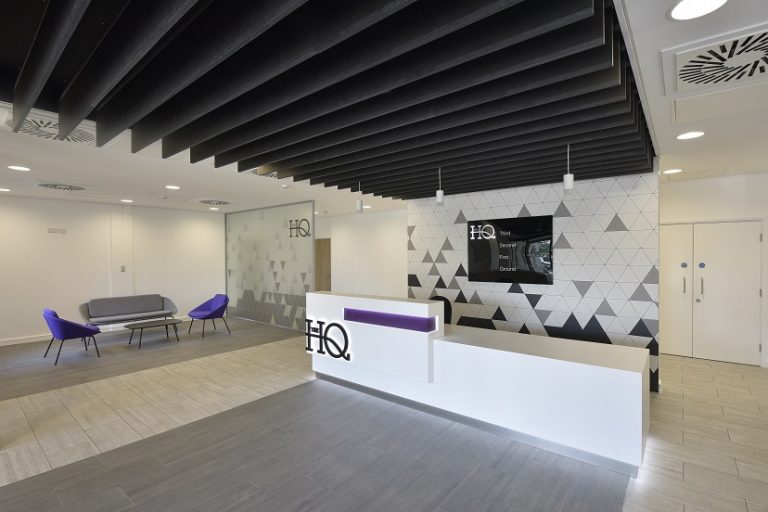
A major refurbishment of The HQ, Rowland Hill House in Chesterfield is underway by property and asset management firm, FI Real Estate Management (FIREM), resulting in a raft of new tenants. A £1.2m remodelling of the ground and third floors has created brand new reception and meeting space and the ground floor has been split into a series of smaller suites in response to market demand. This is now fully occupied by a diverse range of businesses including software consultancy Forefront Technology and advertising agency, Eehhaaa. The next phase of works will see a £1m+ refurbishment of the first and second floors that will see the space divided to provide smaller units, with FIREM already in discussions with a number of interested parties from Derbyshire and beyond. The HQ, Rowland Hill House offers a wide range of refurbished, flexible office space from 400 sq ft up – right up to 60,331 sq ft across four floors. Space can be divided in order to meet specific business requirements, with turnkey and bespoke packages available. The property also boasts 326 on site parking spaces. A spokesperson for FI Real Estate Management said: “We continue to see strong demand for high quality office space in prime locations in Derbyshire and the surrounding area, particularly those with ample on-site parking like here at The HQ, Rowland Hill House. “Local and regional businesses are keen to find first class office environments but understandably want the flexibility to create solutions that are tailored to them and suit their unique needs. We’re able to offer traditional leases as well as bespoke, turnkey packages and are already seeing good interest in floors one and two on this basis.”

Energy strategy to create half a million jobs and wean us off fossil fuels, labelled as ‘recipe for failure’

Scientists, climate campaigners and politicians alike have warned that the government energy strategy, geared to weaning the UK off fossil fuels and creating half a million jobs by the end of the decade, is a ‘recipe for disaster’ and will do little to cut fuel bills or boost the country’s long-term energy independence, security and prosperity. The government’s British Energy Security Strategy sets out how Great Britain will accelerate the deployment of wind, new nuclear, solar and hydrogen, whilst supporting the production of domestic oil and gas in the nearer term – which could see 95% of electricity by 2030 being low carbon. The strategy will see a significant acceleration of nuclear, with an ambition of up to 24GW by 2050 to come from this safe, clean, and reliable source of power. This would represent up to around 25% of our projected electricity demand. Subject to technology readiness from industry, Small Modular Reactors will form a key part of the nuclear project pipeline. A new government body called Great British Nuclear, will be set up to bring forward new projects, backed by substantial funding, and the £120m Future Nuclear Enabling Fund will be launched this month, potentially delivering up to eight reactors, equivalent to one reactor a year instead of one a decade, accelerating nuclear in Britain. Other plans also include:
  • Offshore wind: A new ambition of up to 50GW by 2030 – more than enough to power every home in the UK – of which we would like to see up to 5GW from floating offshore wind in deeper seas. This will be underpinned by new planning reforms to cut the approval times for new offshore wind farms from four years to one, and an overall streamlining which will radically reduce the time it takes for new projects to reach construction stages while improving the environment.
  • Oil and gas: A licensing round for new North Sea oil and gas projects planned to launch in Autumn, with a new taskforce providing bespoke support to new developments – recognising the importance of these fuels to the transition and to our energy security, and that producing gas in the UK has a lower carbon footprint than imported from abroad.
  • Onshore wind: developing partnerships with a limited number of supportive communities who wish to host new onshore wind infrastructure in return for guaranteed lower energy bills.
  • Heat pump manufacturing: A Heat Pump Investment Accelerator Competition in 2022 worth up to £30 million to make British heat pumps, which reduce demand for gas.
Attempts will be made to increase the UK’s current 14GW of solar capacity, consulting on the rules for solar projects, particularly on domestic and commercial rooftops. The scheme also aims to double the ambition to up to 10GW of low carbon hydrogen production capacity by 2030, with at least half coming from green hydrogen and using excess offshore wind power to bring down costs. This will not only provide cleaner energy for vital British industries to move away from expensive fossil fuels, but could also be used for cleaner power, transport and potentially heat. This plan comes in light of rising global energy prices, provoked by surging demand after the pandemic as well as Russia’s invasion of Ukraine. This will be central to weaning Britain off expensive fossil fuels, which are subject to volatile gas prices set by international markets we are unable to control, and boosting our diverse sources of homegrown energy for greater energy security in the long-term. In total, the British Energy Security Strategy builds on the Prime Minister’s Ten Point Plan for a Green Industrial Revolution, and, together with the Net Zero Strategy, is driving an unprecedented £100 billion of private sector investment into new British industries including Offshore Wind and supporting 480,000 new clean jobs by the end of the decade. Business and Energy Secretary Kwasi Kwarteng said: “We have seen record high gas prices around the world. We need to protect ourselves from price spikes in the future by accelerating our move towards cleaner, cheaper, home-grown energy. “The simple truth is that the more cheap, clean power we generate within our borders, the less exposed we will be to eye watering fossil fuel prices set by global markets we can’t control.

“Scaling up cheap renewables and new nuclear, while maximising North Sea production, is the best and only way to ensure our energy independence over the coming years.”

Dr Shaun Fitzgerald FREng, Director of the Centre for Climate Repair says ” “The Energy Strategy launched by the government today is just 3 days after the harrowing IPCC AR6 WGIII report as to what is happening climate-wise and the urgency required for measures to change course. On Monday we learned that emissions need to peak no later than 2025. That is three years from now. “We need to see change, and we need to see it fast. Does the Energy Strategy launched today deliver these changes in the timescales required? “A big story in the strategy involves the procurement of new nuclear stations. Whilst these will be low carbon in operation, they won’t be delivering electricity in the timescale required. It is at least 10 years hence for a new power station. “Furthermore, an Energy Strategy should involve significant efforts in both supply and demand. The Energy Strategy today talks a lot about Energy Supply, but much less on Demand Reduction. Reducing demand (by increasing efficiency) has an immediate benefit not just in terms of the climate, based on the assumption that some of the energy is still provided by fossil fuels, but also in terms of bills. And energy bills are a huge issue for many people right now.  The Energy Strategy launched today is really an Energy Supply Strategy. We need more investment, urgently, in energy savings schemes. This would also help reduce our reliance on energy imports. “The pace of change associated with today’s Energy Strategy is nothing like that which we need. And the climate won’t wait.” Prof Sir Jim McDonald FREng FRSE, President of the Royal Academy of Engineering, says: “The UK’s energy system faces a combination of threats from high consumer costs that threaten to worsen energy poverty, disruptions in the global supply chain due to Russia’s invasion of Ukraine, increasing risk to energy security and unsustainably high carbon emissions as a result of fossil fuel dependence, which must fall rapidly and immediately in order to have any chance of meeting the Paris goal of 1.5C. “There are many vital, low-regrets policies that would address all these issues at the same time, particularly:
  1. rapid renewables and energy storage deployment alongside energy network investment;
  2. home insulation measures which deliver at least half a million retrofits per year, including support for heat pump supply chains; and,
  3. measures to reduce energy demand and increase energy efficiency across all sectors.
“We are pleased to see some of this in the energy security strategy, such as further expansion in the ambition for offshore and floating wind power. A focus on the system level architecture is also welcome and a vital step to enable the transformation required in the energy system as a whole to reach net zero. However, there are some unanswered questions that must be addressed. New nuclear could take until 2035 to make a difference, and is reliant on the availability of technology and skills, neither of which is guaranteed. We will need more than targets to realise the ambition for 10GW of low carbon hydrogen production capacity by 2030, not least the requirement for significant investment to rapidly and urgently scale critical infrastructure such as Carbon Capture Utilisation and Storage for blue hydrogen and investment in renewable energy generation and electrolyser roll out for green hydrogen. And in the meantime, we need more short-term measures to increase energy independence or reduce emissions at the scale required, particularly demand-side measures, such as home insulation policies. “The scale of the skills challenge should also not be underestimated. This demand for massive growth in green jobs comes at a time when engineering skills have largely been stagnating over the past ten years. In higher education, the proportion of students studying engineering has remained at around 5% for the past 15 years, and in certain subject areas such as electronic and electrical engineering, critical to our net-zero transition, there has been long-term decline. The numbers of new apprentices starting engineering and manufacturing apprenticeships has also been in decline. “Much of what the government is doing to address the challenge is moving in the right direction, but the tendency towards letting the market dictate pace, scale and detail is still a concern. We need greater consideration of skills as a strategic national asset with more direct government interventions and less reliance on the market to find our future engineers and technicians.”


Economic growth to halve this year says leading business lobby group

The UK economy grew more slowly in February, an indicator that the rebound was losing steam even before the impact of Russia’s invasion of Ukraine, says Suren Thiru, Head of Economics at the British Chambers of Commerce.  He said: “Tourism-related industries and accommodation services recorded the strongest improvements in the month as the end of Plan B restrictions, and reduced concerns over Omicron, supported activity. However, this was mostly offset by a significant drop in NHS Test and Trace services and vaccine activity as well as declines in industrial and construction output.     “February’s slowdown is likely to be the start of a prolonged period of considerably weaker growth as rising inflation, surging energy bills and higher taxes increasingly damages key drivers of UK output, including consumer spending and business investment.   “Weakening health sector output following the end of free Covid testing and mass vaccinations, is also set to weigh on UK GDP in the near term.   “The Government must provide urgent financial support, through the expansion of the energy bills rebate scheme, to include small firms and energy intensive businesses, and an SME energy price cap to protect smaller firms from some of the price increases.”  UK trade data from the ONS remained volatile in February 2022 as changes in data collection methods unwind. The figures for February 2022 reported a 25% increase in exports (following a 22% decline the previous month). Comparing the last 3 months data together with that over the same period 4 years ago reveals that exports in goods were £1bn lower (1.2%). It is hard to discern therefore any sustained increase in UK exports of the levels currently occurring in our largest neighbouring trading partners.  Furthermore, the ONS Business Insights and Conditions Survey reveals increasing challenges faced by firms with export and import paperwork respectively. 68% of exporters and 70% of importers reported these challenges in February to March 2022 a rise of 7% and 9% respectively. This echoes BCC data which finds a similar worsening trend.

New Digital Growth Grant worth over £12million

0
The Department for Digital, Culture, Media and Sport (DCMS) is launching a £12.09 million Digital Growth Grant. The grant will focus on opening up access to skills training and advice and providing support services to the digital and tech sector over two years. Bids will be invited to address identified market failures and accelerate the growth of tech start-up and scale-up ecosystems across the regions and nations of the UK. The successful bidder will be awarded up to £12.09 million to be spent over two financial years 2023/24 and 2024/25. Objectives The objectives of the Digital Growth Grant will be based around:
  1. Delivering support services to the digital sector, particularly in transformative/emerging technologies. These services should address key challenges faced by a wide range of companies from seed stage to series A/B, their first or second round of financing.
  2. Developing the growth of regional support networks for tech start ups and scale ups. Activities should deliver concrete improvements against three or more areas identified in DCMS Regional Ecosystems Report: Investment, Skills, Innovation, Infrastructure and Business Growth/GVA. Interventions should be tailored to local needs and tech specialisms, and developed in partnership with local bodies.
  3. Ensure founders and firms can access digital entrepreneurship and investment readiness training, with tailored advice to help develop their skills to start and grow a tech business. Clearly signpost start-ups and scale-ups to the digital skills initiatives in private and the public sector (DCMS’ local digital skills partnerships) and share information on the types of roles available in tech companies, the skills required to access these roles, and direction to low/no cost skills provision to acquire those skills.
  4. Promoting and raising awareness of the strength and competitiveness of the UK tech sector with the aim of boosting investor confidence and inspiring the next generation of tech workers and entrepreneurs.
The competition will be run this summer and the successful organisation will receive the funding from Saturday 1 April 2023. Further details on the eligibility criteria and application process will be published in due course Timelines are indicative only and subject to change. 1. June 2022: Applications open 2. August 2022: Applications close 3. September 2022: Successful bidder notified 4. April 2023: Successful bidder to begin activities 5. April 2025: Funding end date
For further information readers can contact: dcmsdigitalgrowthgrant@dcms.gov.uk

60,000 packs of essential medicines donated to Ukraine by Leicestershire pharmaceuticals business

A Leicestershire pharmaceuticals business has donated almost 60,000 packs, which will provide 1.29 million doses, of essential medicines to communities impacted by the war in Ukraine. The significant donation by Loughborough-based Morningside Pharmaceuticals came about after the company’s founder and chairman, Dr Nik Kotecha OBE DL, spoke with the Ukrainian Ambassador to the United Kingdom, Vadym Prystaiko, at a business event in London. Dr Kotecha, who was also recently appointed a Deputy Lieutenant of Leicestershire, said: “The heartbreaking situation in Ukraine has touched us all, and as like so many people in the United Kingdom, we’ve been keen to do everything we can to help the victims of this terrible conflict. “After speaking to the Ambassador, the Ukrainian Embassy identified a range of Morningside manufactured medicines, which their healthcare system is in urgent need of. The Embassy and our teams at Morningside then worked closely with the Department for Health and Social Care (DHSC) in the UK to ensure the medicines could be shipped rapidly as humanitarian aid. “I would like to thank our International, Supply Chain and Warehousing teams for turning this around in a matter of days, to ensure those in urgent need of their medicines, received them as quickly as possible.” The large shipment of medicines has been transported in a secure and temperature controlled environment via Morningside’s logistics partner to the Embassy’s distribution hub in Poland. From there the medicines will be supplied to hospitals, healthcare centres and patients throughout Ukraine, including the regions hardest hit by the Russian invasion. Morningside Pharmaceuticals has also supported the aid effort in Ukraine by storing a large quantity of supportive goods, such as hundreds of packs of nappies, feminine hygiene packs, sleeping bags and children’s essentials in its Loughborough warehousing. These goods were donated through Loughborough’s Polish associations and social clubs by members of the public and have now been delivered to support Ukrainian refugees in Poland. Dr Kotecha added: “We all hope for a swift resolution to the War in Ukraine, which brings an end to the suffering and atrocities taking place there. There has been a huge outpouring of support for people caught up in this terrible conflict, and it’s been humbling to see the enormous generosity of people in the UK for those suffering extreme and often life threatening hardships, due to no fault of their own.”

Ideagen raises more than £4,200 for Red Cross humanitarian effort in Ukraine

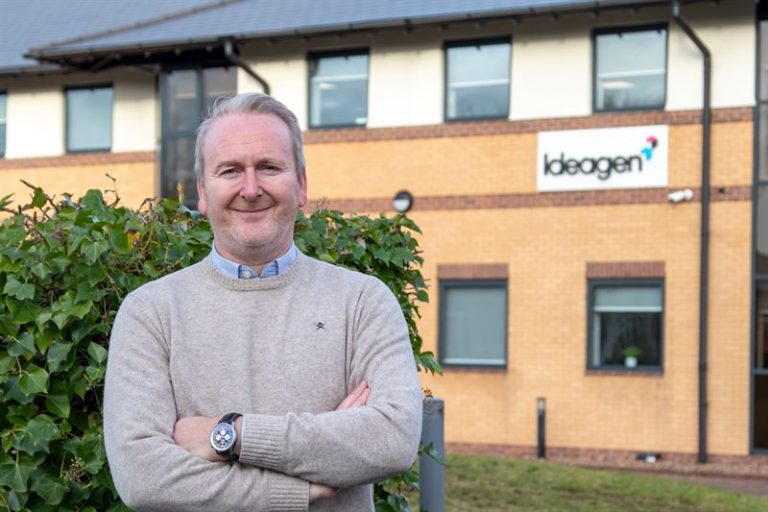
Software provider, Ideagen Plc, has raised funds for victims of the Ukrainian war, with more than £4,200 being donated to relief efforts led by the British Red Cross Society. The Nottingham-based firm, which specialises in risk and compliance software for regulated industries, launched the appeal to its staff at the beginning of March when news begun to unfold of the devastating events in Ukraine. Ideagen employees across the globe joined the fundraising efforts, while the software firm matched every penny donated, taking the total to £4,204. Staff were encouraged to undertake random acts of kindness or good deeds throughout the month to mark the fundraising campaign. Ideagen CEO, Ben Dorks, said: “Our hearts are with those affects by the horrific conflict in Ukraine. We believe in harnessing the power of working together to support the humanitarian efforts of the Red Cross which is why we have matched donations made by our staff. “We stand with and support the people of Ukraine and strongly condemn the attacks by the Russian government. Right now, cash donations are by far the quickest, safest and most direct way to support the work of the Red Cross in Ukraine and neighbouring countries and I am so proud of our staff for their generosity.” A dedicated JustGiving page was set up for Ideagen staff to contribute, which received donations from its offices across the world, from Australia to the US. Meanwhile, collection buckets for loose change were placed around Ideagen’s buildings too.

New deals show huge demand for East Midlands industrial space

A commercial property agency says it is seeing a huge demand for industrial units in the East Midlands as the country starts to emerge from the pandemic. Bromwich Hardy says the market in key areas of the region is now becoming just as competitive as that further south and to the west, where demand is running well ahead of supply. Bromwich Hardy founding partner Tom Bromwich says two deals to lease units at Harrowbrook Industrial Estate at Hinckley – both completed in quick time – shows the strength of the market in the area. “We have recently concluded deals for our client Mileway on Unit D1 & D2 and D6 and set new groundbreaking rents at the estate on both leases,” said Tom. “Both units are in a fantastic location, benefit from an excellent landlord in Mileway and are in first-class condition. “Unit D1 & D2, which extends to more than 15,500 sq ft, had just benefitted from a comprehensive refurbishment to bring it up to the highest standards, whilst the 7,500 sq ft on offer at D6 was also hugely sought after. “In fact, we could have let either of them three times over such was the quality of the offer. The market in Hinckley is now starting to rival those further south like Coventry and Leamington, with its excellent transport links and skilled workforce helping drive demand.” Unit D1 & D2 has been let for five years at an annual rent of £101,100 to masonry barbecue specialist Buschbeck UK, whilst Unit D6 has also been let on a five-year deal at £47,500/year to Master Auto Glass. Tom also praised Richard Sidaway, Mileway asset manager, for his role in helping conclude the deals. “Mileway are a first-class client and Richard in particular is a pleasure to work with, bringing his own knowledge of the property market and its processes to play to ensure everything proceeds smoothly.”

P&O, PR & HR – what an utter ship-show! By Greg Simpson, founder of Press for Attention PR

Greg Simpson, founder of Press for Attention PR and the PR and Communications Ambassador for the IoD in Nottinghamshire and Derbyshire, discusses what PR lessons can be learned from the P&O fiasco. When I initially wrote this (March 23rd) it was being reported by various media outlets that P&O has said 800 redundant staff will be offered £36.5m in total – with around 40 getting more than £100,000 each. It was also being denied that they broke the law when it sacked the workers without warning last week. Many had questioned whether the move was legal – but P&O said those affected were employed outside the UK. Oh, that’s OK then, sod ‘em! Today as I write (24th), the winds have changed aboard the bad ship P&O with an admittal from P&O boss Peter Hebblethwaite that the decision to sack the workers last week without consulting the unions broke the law. SHOCK HORROR. “We chose not to consult and we are, and will, compensate everybody in full for that,” he said. Calmer seas ahead? Doubtful. I appreciate that a lot may change before this column comes out but the advice will remain sound. Now, I’m not an HR expert, but let’s just recap how this utter farce has played out. It is actually painfully easy to summarise. P&O sacked around 800 staff last week (Thursday 17th March) by video call. Talk about finding “efficiencies,” or as Winnie The Pooh might suggest rather aptly, a “fish in the sea.” P&O said it was a “tough” decision but it would “not be a viable business” without the changes. However, the government described the workers’ treatment as “wholly unacceptable,” whilst the RMT union is threatening legal action, on one of the “most shameful acts in the history of British industrial relations.” Speaking of relations, let’s consider the Public Relations impact here. The bit I most certainly AM an expert in. Never mind the way it was handled, I’ll come to that, just consider this, if business was not viable before, how many customers would now actually WANT to travel with this bunch if they had a choice? Not many. So a challenging market is now shrinking further and further, all down to how this utter ship-show was handled. They have apparently made huge savings by switching to agency staff, however, let’s consider the huge COST they have incurred in brand damage – #boycottpando reached thousands of shares in days. Let’s look at this pathetic approach to PR, straight out of “My First Book of Bungling” published by Lazybird. First, the video message – this never plays out well. Remember Better.com, well this was worse! It wasn’t even live, total cowardice. Then the physical aspect, rumours of staff seen in handcuffs being forced from their posts. Now add a dash of stranded customers, a soupcon of cheap labour and bring to the boil with a defiant message about viability and employees not being UK-based so there. It boggles the mind. When politicians and unions are in agreement, you know you’ve dug yourself into a very large hole. This fiasco is going to rumble on from a PR and HR perspective. It will become a textbook example of what NOT to do. Will it blow over? Right now, there’s no port that will provide sanctuary in this storm – they are holed below the waterline and sinking fast. A former business journalist, Greg Simpson is the author of The Small Business Guide to PR and has been recognised as one of the UK’s top 5 PR consultants, having set up Press for Attention PR in 2008. He has worked for FTSE 100 firms, charities and start-ups and conducted press conferences with Sir Richard Branson and James Caan. His background ensures a deep understanding of every facet of a successful PR campaign – from a journalist’s, client’s, and consultant’s perspective. See this column in the April edition of East Midlands Business Link Magazine.

Work with us to fix “utter injustice” of poor disability employment, small businesses urge Government

More than a million small business owners and sole traders are managing disabilities or health conditions on a daily basis, with a sizeable share reporting that they have been subject to discrimination or negative treatment, according to the latest study from FSB. Its new ‘Business Without Barriers’ report finds that more than half (51%) of small employers have employed someone they know to have a disability or health condition in the past three years. Amongst small business owners who themselves have a disability or health condition, the share of those who would employ people they know to have disabilities or health conditions is even greater (66%). Despite this, only one in twenty (5%) small businesses have used the Government’s Access to Work scheme and fewer than one in ten (8%) disabled business owners have accessed local authority business support services – the share is half that of their non-disabled counterparts (16%). A quarter (25%) of small business owners across the UK are managing a disability or health condition on a daily basis, and close to one in four (24%) of these business owners report suffering discrimination or negative treatment. Latest official figures show there are 5.5 million small businesses across the UK, indicating that well over a million business owners have a health condition or disability. The disability employment gap – the percentage point difference between disabled people in work and the employment rate for the economy as a whole – currently stands at just over 28%, with small businesses employing a larger proportion of disabled people in their overall workforce than larger counterparts. In response to the findings, FSB is launching a 10-Point Plan for Disability and Entrepreneurship and a freely accessible resource hub on its website for small businesses. FSB National Chair Martin McTague said: “It is an utter injustice that so many disabled people are denied the opportunities that employment and entrepreneurship bring. “This can and should be fixed by Government and enterprise working together. Too often we have seen small moves and siloed approaches in this area – we all need to show the ambition necessary to overcome the scale of the barriers disabled people face in our economy. “At a time when we need more people to set up a small business and drive the economy, more than half of disabled entrepreneurs say they have experienced a barrier due to their disability or health condition. “Addressing this would create more economic activity and enterprise, which is why we also want to see Government commit to a target for 100,000 new disabled entrepreneurs by 2025.” FSB’s Disability, Health, and Wellbeing Policy Chair, Julian John, said: “This 10-Point Plan – and the host of other recommendations we have made across Whitehall departments – shows how Government and business can work together to bring more disabled people into workplaces to the benefit of individuals, local communities and the economy as a whole.”   Louise Rubin, Head of Policy and Campaigns at Scope, said: “At Scope, we know that small businesses play a vital role in employing disabled people, as highlighted in this report. “But it is clear that many small businesses need better support from Government if they are to increase the number of disabled people that come into – and thrive in – their organisations. “The latest figures show that the disability employment gap has grown to 28.9 percent. The gap has been stuck at around this figure for more than a decade and action is desperately needed. “We support the recommendations put forward by the FSB and particularly welcome proposals to improve Access to Work, and to fund disability employment schemes that support disabled people into work for the first time. “We would urge Government to carefully consider the recommendations included in the report as it reviews policy in this area.” Emma Mamo, Head of Workplace Wellbeing at Mind, said: “Employees with mental health problems face many barriers to accessing and staying in jobs suited to their individual skills and aspirations, and too often people fall out of work because they don’t get the support they need. “We welcome this FSB report, particularly the recommendations around extending the types of medical professionals who can provide fit notes when people need time off sick and making sure employees who’ve been off sick are offered phased returns to work. “With employee mental health worsening during the pandemic, it’s never been more important for employers to invest in staff wellbeing, which helps improve productivity, morale and retention and decreases sickness absence.” FSB’s 10-Point Plan for Disability Employment and Entrepreneurship:
  1. Act to close the Disability Entrepreneurship Gap, including by committing to a target for 100,000 new disabled entrepreneurs by 2025, and 250,000 more by 2030.
  1. Redress disadvantage at the point of recruitment, including through a new disability Kickstart Scheme to make the most of pandemic-era policy innovation and give disabled people who are long-term unemployed their first proper chance in the workplace.
  1. Increase retention following sickness absence, including through a full Statutory Sick Pay rebate which prompts phased return to work for people who are off sick and by allowing a wider range of health professionals such as physios and mental health nurses to complete sign-off of Fit Notes.
  2. Promote progression in work for disabled people, including by allowing all disabled employees to ‘passport’ their portable Access to Work support to a new employer if they secure a new job.
  3. Help make workplaces better for disabled employees, including through new Line Management Bootcamps so front-line managers are better able to support disabled staff and deliver flexible working.
  4. Smooth transition from education to employment, including through joining up careers guidance and disability support, making sure disabled children access work experience and rolling out Access to Work passports for all young disabled people.
  5. Make treatment easier to manage alongside work, including by introducing stricter waiting time targets and service standards in the NHS for musculoskeletal problems and mental health treatment; and reviewing NICE clinical guidance to ensure better co-ordination between the health system and employment support.
  6. Improve JobCentre Plus’ offer to disabled people, including making Universal Credit more responsive to fluctuating health conditions and launching a revitalised version of the New Enterprise Allowance to help disabled jobseekers start their own businesses.
  7. Increase availability of Occupational Health support, including by making it easier for large firms to make Employee Assistance Programmes available to suppliers and delivering the findings from its testing and evaluation of the OH subsidy for SMEs and the self-employed within the next six months.
  8. Make disability employment central to cross-Government decision making including by establishing disability employment as a cross-departmental outcome metric in the Treasury’s Priority Outcomes targets and increasing the level of internal scrutiny of Equality Impact Assessments.

Chart-topping band Marseille join Derby businesses as fundraising target for Ukraine event at Bustler Market is smashed

A family-friendly charity event organised by a group of small businesses in Derby has raised more than double the initial fundraising target.

Chart-topping band Marseille, from Derby, entertained crowds at Bustler Market while businesses including personalised gift company Colleague Box, cosmetics brand Divine Box and artist Carla Dee – who painted one of the giant Rams that formed part of the Derby Rams Trail last summer – hosted pop-up shops.

The initial target for the event, held to raise funds for the DEC – Ukraine Humanitarian Appeal, was £1k but organisers are expecting to break the £2k mark.

Adam Bamford, of Colleague Box, said: “It is just fantastic to see how the city has come together to support this event, which we’re proud to support.

“Derby has a big heart and we’ve received so many kind donations for the raffle, including a signed Derby County shirt from Derby County Community Trust, tickets to Chatsworth House and bottles of bubbly.

“Derby player Festy Ebosele donated a pair of his boots, which he signed, and they were won by a young Rams fan who was over the moon to have won them. From schools doing bake sales to village halls becoming drop-off centres for donations, the generosity of the people of Derby never fails to amaze me.

“As a parent myself, I find it heartbreaking that families are being separated and having to flee their country. I couldn’t stand by and do nothing; Colleague Box donated 25% of our profits made last month to assist the brave people of Ukraine but organising a fundraising event with the incredible ladies who we recently worked with on our International Women’s Day gift box, seemed such a good idea to raise more money.”

Marseille, who have supported band The Sherlocks on tour, said that they were proud to be doing their bit for their home city.

“The incredible people of Derby have been so supportive of our journey so far and we are looking forward to taking part in this community fundraising event for the people of Ukraine,” said Will Brown, of Marseille.

Meanwhile, swimmers at Derby’s 4Strokes Academy have been swimming the length of the Ukraine during their lessons – 347 miles in total – to raise funds for people in war-torn Ukraine.

The club have set up a JustGiving page which has raised almost £10,000.

Co-founder Hayley Mitchell said: “Swimming is a life-skill and we have both young swimmers and adult swimmers at our school.

“It’s been a huge task; we’ve swam more than 38,000 lengths of our pool in Derby and, regardless of whether the children can swim with or without aids, they have been given the task of swimming as many lengths as they can so that we can collectively reach our target.

“We also held a 12-hour sponsored swim to boost the total further and invited parents, friends and families of our children to play their part. It’s been a real team effort and we’re over the moon to have raised so much money.”

Next size up for growing fashion business

After just 18 months in its new premises, the Leicester Fashion and Textiles Academy Ltd, whose services include fashion design, manufacture and consultancy, has outgrown the space and is on the move again. The Leicester Fashion and Textiles Academy Ltd (LFTA) was started in 2015 by fashion designer Janie Morgan-Wood whose experience includes designing for household brands such as Next, Matalan and Marks & Spencer. For several years, Janie used design rooms owned by other companies at weekends to develop her business. Her core service was supporting manufacturers with their technical skills and she also began helping start-up companies that wanted to get a foothold in the industry. The business was doing well until Covid happened and she lost access to these design rooms. Janie said: “As I sat at home during lockdown I realised I needed to adapt. I needed my own physical space and machinery.” With the help of the Business Gateway Growth Hub she successfully applied for a Leicestershire Covid Recovery Grant and was awarded £5,500. Together with her own funds, she invested in machinery and premises in Wigston. A Small Business Recovery grant of £3,000, from Leicester City Council also meant she was able to set up a design room with new machinery to create premium samples. This space in Wigston started as a design hub but today her business also manufactures small runs of 100-300 garments for niche, high-end customers. Products include ladieswear such as dresses, T-shirts, hoodies, cycling shorts, swimwear, yoga clothing and lingerie, and latterly dog hoodies. They also make men’s leisurewear including sweatshirts. The business started to build so Janie’s husband Roy gave up his lecturing job and joined her full-time. She’s also taken on three machinists and a part-time fashion designer. They’ve outgrown the current location so have just moved to a 3,500 square foot building on Linden Street in Leicester. Janie adds: “We’re helping new brands move forward with quality products made in the UK, and that’s something we are very proud of. With more than 35 years of experience, I’m able to support these brands to make better decisions for fabric and trims, it’s about focusing on what they really want. “We’ve seen lots of textile manufacturing in Leicester that is cheap, fast-fashion, mass production for high street or online retailers but very few places make better quality garments. Our staff have a high level of skill, every piece is quality checked, it’s quite artisan.” The business is also making an impact on the environment. As well as making garments of a high quality that last, they are supporting start-ups and developing brands by sourcing affordable fabric. Janie explains: “There’s a lot of waste in our industry, not so much in our business, but once you get into larger-scale production there’s over manufacturing with unused fabrics and trims. “We work with supplying companies to identify any excess, good quality stock which is offered to our clients. This means they can use better quality fabrics and trims at an affordable price. We’re helping these young brands achieve their aims saving them money and diverting unwanted fabrics from landfills.”

Office unit sold at Nottingham business park

Nationwide Care, a rapidly growing care company, has bought Unit 1 Park Lane, a self-contained office building. The property is situated in a prominent position on an established business park known as Park Lane Business Centre in Basford, Nottingham which has a wide variety of occupiers. The unit comprises approximately 1,700 sq ft of modern office accommodation situated over two floors with a generous amount of car parking also provided. Amy Howard, of FHP’s office and industrial team who agreed the sale, said: “Unit 1 Park Lane is situated in an excellent location and provides high quality office space, for which we expected a high level of interest. “It was the perfect opportunity for both owner occupier and also for investment purposes, resulting in a high level of interest on the property within the first month alone. “We managed to generate several competitive offers from the interest we received resulting in an excellent outcome for our client which saw the property under offer in under a month of it being on the market. “The office market may not be in as high demand as other sectors, but the level of interest received on this unit alone shows that the demand is still there. That being said, interest is still high for freehold units and demand is certainly outweighing supply. “It has been a delight to work alongside both our client and Nationwide Care in securing this deal and I wish them all the best in the future.”

Next stage of project to save last major bellfoundry in Britain underway as contractors invited to tender

The Saving the Last Major Bellfoundry in Britain Project is entering its next stage as it invites main contractors to tender for a programme of capital works to protect and enhance Loughborough Bellfoundry’s Grade II* Listed Buildings and museum, funded by a number of generous donors and the National Lottery Heritage Fund.

The Loughborough Bellfoundry – which is in the centre of the Leicestershire town – is also known as John Taylor’s Bellfoundry, and is the last major bellfoundry in the UK and Commonwealth.

More than 25,000 bells, which can be heard in more than 100 countries, have been cast there since the present bellfoundry was built in 1859, from London’s St Paul’s Cathedral to Washington National Cathedral in the US capital, and from the National Carillon in Canberra, Australia to Cape Town City Hall in South Africa.

In 2016, the Loughborough Bellfoundry Trust was set up to begin the project of restoring the bellfoundry’s buildings, redeveloping the site’s museum and protecting the bellfoundry and the ancient craft of bell making for generations to come.

Plans for the comprehensive restoration of the Victorian site have been drawn up by a team lead by Caroe Architecture Limited and the Loughborough Bellfoundry Trust is now in a position to invite tenders from main contractors to deliver the project.

Works are expected to begin later this year and complete towards the end of 2023. Main contractors are invited to submit their proposals by the deadline of 16th May 2022.

The programme of works will include reconfiguration of the buildings’ archive room, office spaces and workshop facilities, as well as the creation of a new entrance into the historic site.

The museum will be improved and enhanced by increasing its footprint to incorporate additional exhibition space and room for an administration office.

Chrissie Van Mierlo, museum director at the Loughborough Bellfoundry Trust, said: “We are incredibly pleased and excited to have issued our invitation to tender on this project. The works are going to preserve and protect these historic and important buildings for years to come and provide a wonderful place for people to visit and learn about the highly specialised craftsmanship that the process of bellfounding entails.

“Our vision is for Loughborough Bellfoundry to become the global centre for the art of bell making and learning. We have been very fortunate to have benefitted from funding over the years to address the most urgent repair and conservation works required, and we’re thrilled to be in a position to enter the next stage of this project to secure the legacy of the Bellfoundry’s bells for future generations.”

Future makers get a helping hand from industry role models

A programme designed to support young people, particularly females, who may be considering or exploring a career working in the built environment, including designing, architecture, surveying and structural engineering, has recently been launched at the new Digital Centre at Chesterfield College. The programme aims to help students develop their knowledge and understanding of the sector and career opportunities, broaden their horizons and build knowledge and awareness of career pathways. It also helps build their self-confidence and communication skills as well as helping them to learn about planning and organising. Championed and supported by the D2N2 Careers Hub, led by the D2N2 Local Enterprise Partnership (LEP) and funded by the Careers & Enterprise Company, the programme builds on a successful pilot programme run in 2021 in partnership with the Chesterfield Property and Construction Forum and Chesterfield Borough Council. The launch event brought together mentors and role models from local companies, including Whitham Cox Architects, Harworth Group, Henry Boot Construction, Barrett Homes, Mascot Management and Airmaster, and matched them with students from local secondary schools and colleges. Students got to meet their mentors, interview them and learn about their companies, jobs and own career journeys, including a team building challenge at Chesterfield-based company CBE+. Each student was set an individual bespoke project by their mentor, which they will work together on over the next few months relating to their role and company. Project manager Alex Gardner, the Work-wise Foundation, who is helping to deliver the programme, said: “It’s just great to see the mentors and mentees getting to know each other and really gelling as a team straight away! What I really love is the enthusiasm and commitment being shown by everyone. The individual challenges set by the mentors all join together to tell the story of a development from initial survey and design to finished structure. This is an added bonus we hadn’t initially envisaged.” Mentor, Katie Burnham, from Henry Boot Construction Limited, said: “I think the first two initial sessions are brilliant as introduction/ice breakers to the students. It’s been a brilliant opportunity to network as well as participate in the mentoring programme and I think the support from St Mary’s career team is really helping their students to get the best out of the programme. “All the students seem really engaged with the opportunity and that’s brilliant to see and be involved with. The bridge building activity was a great opportunity to teamwork and learn about the learning style of our mentees.” Will Morlidge, Interim Chief Executive at D2N2 LEP, said: “Providing young people with meaningful encounters and showcasing opportunities to inspire them into a sector and career is central to the work of the D2N2 LEP Careers Hub. “It has been fantastic to see this develop from last year’s pilot and we are proud to be funding the new programme. Making links between our ambitious young people and some of our region’s key employers is just one of the ways our Careers Hub is supporting inclusive economic growth.” For the employers, the programme helps them to make a real difference in a young person’s confidence, knowledge, job and career prospects while developing their own communication and leadership skills and potentially identifying future employees. It also provides a great networking opportunity with others in the sector and a chance to showcase the business and industry as a great place to work. The learning and outcomes from the mentor and student partnerships and projects will be showcased at a Celebration Event back at Chesterfield College on 8th July 2022.