
LATEST ARTICLES

Ollerton regeneration plans move into formal review

0

A major redevelopment proposal for Ollerton town centre is now with planners, marking another step in a multi-year regeneration effort backed by £20 million in levelling up funding.

The submission outlines a mixed-use scheme incorporating a three-screen cinema, café space, a public-sector hub, and new housing. The project is designed to modernise the town centre offer and create conditions that support local services, business activity, and long-term economic resilience.

Councillor Claire Penny, Portfolio Holder for Sustainable Economic Development, said: “This is a landmark moment for Ollerton! The submission of planning permission marks the beginning of a new chapter for the town, one that reflects the aspirations of our community and the feedback we’ve received throughout our consultations.”

She continued, “We’re excited to see this vision come to life. This regeneration project is not just about physical transformation – it’s about creating a town centre that truly serves the people who live and work here. From improved public services and leisure facilities to new homes and business opportunities, every element of the plan has been shaped with our residents in mind. We’re committed to delivering a space that celebrates Ollerton’s heritage while embracing its future, and I’m proud to be part of the team driving this change forward.”

The application follows several rounds of public engagement led by Newark and Sherwood District Council. The authority intends to have the plans reviewed by its planning committee early next year. If the scheme progresses as anticipated, construction is expected to begin in the summer, with completion targeted for 2028.

For the regional business community, the redevelopment signals emerging opportunities linked to construction, future service provision, supply chain activity, and increased footfall once the scheme opens. The project forms part of broader efforts to strengthen the economic foundations of towns across North Nottinghamshire.


Leicester firms strengthen operations with digital and sustainability support

0

Leicester businesses are increasing their investment in digital capability and low-carbon practices through a local accelerator programme designed to support growth. The initiative, delivered by East Midlands Chamber for Leicester City Council, offers fully funded consultancy, training, and energy audits to organisations seeking to modernise their systems and reduce emissions. It runs until March 2026 and is backed by £119,110 from the UK Shared Prosperity Fund.

More than 100 companies have taken part so far. Workshops have focused on AI adoption, social media content, data analytics, and broader digital processes. Participating firms can also access Growth Vouchers of up to £2,000 to support the implementation of new tools and technologies. Dedicated advisers provide one-to-one guidance across digital transformation and sustainability planning.

East Midlands Chamber Deputy Chief Executive Diane Beresford said: “I’m delighted that the support offered by the Accelerator project has been so well received by businesses in Leicester. We’ve worked with the Council to deliver the right type of interventions to help businesses address common challenges that present themselves when it comes to growth and sustainability. Often, businesses simply need a sounding board for their plans. Once we know what they’re trying to achieve, we can explore the options for bringing in expert support – whether that be the fully funded training, consultancy and sustainability audits through the Accelerator project or by signposting them to national support. An exciting journey of growth inevitably follows.”

Recent case studies reflect the variety of support in action. A Leicester-based sports education provider used the programme to complete a business review, install a CRM system, and act on energy-efficiency recommendations.

An international health procurement organisation switched energy suppliers following its audit, meeting its renewable energy target and securing annual savings of around £8,000. A long-established manufacturing firm created a sustainability action plan for a new facility, integrating efficiency measures during the design stage.

The project continues to attract firms across multiple sectors as organisations refine operations, streamline digital processes, and progress their decarbonisation plans.

Purple House Clinic Lincoln launches intensive trauma therapy to support workforce resilience

Purple House Clinic Lincoln has launched a new one-day intensive trauma therapy service, designed to help employers, executives, and professionals across Lincolnshire access fast, effective psychological support that reduces downtime and promotes long-term workforce resilience. The new intensive Eye Movement Desensitisation & Reprocessing (EMDR) approach addresses a major challenge faced by businesses today; the rising impact of stress, burnout and trauma-related difficulties on employee wellbeing and productivity. By offering accelerated trauma recovery over one or two days either in-person or online, the clinic aims to provide a practical solution for individuals whose work or leadership responsibilities make traditional weekly therapy difficult to maintain. EMDR is a globally recognised, evidence-based therapy that helps the brain reprocess distressing experiences. The intensive format, which is commonly used in high-performing sectors such as the military, emergency services and elite sport, enables deeper therapeutic progress within a compact time frame, supporting quicker returns to work and improved performance sustainability. “Across the East Midlands, businesses are increasingly recognising that emotional wellbeing is not just a personal issue, but a strategic one,” said Alice Vine, Clinical Director and Forensic Psychologist at Purple House Clinic Lincoln. “Over the past six months we’ve seen substantial demand from professionals who need effective support delivered efficiently. Intensive EMDR meets that demand, helping people regain clarity, capacity and confidence without stepping away from work for months at a time. “As an accredited EMDR Practitioner, Consultant and Facilitator, I know how transformative this therapy can be when delivered well. High-performing professionals often carry heavy emotional loads. When addressed early and effectively, organisations benefit from better leadership stability, fewer absences, improved decision-making and more engaged teams.” Since its founding in 2018, Purple House Clinic Lincoln has built a reputation for excellence in evidence-based psychological support, offering a broad range of services including therapies for depression, anxiety, trauma, and neurodiversity assessments. With a growing multidisciplinary team of 18 therapists, the clinic delivers more than 415 hours of tailored therapeutic care per month, reflecting its strong commitment to kind-hearted mental health care. Intensive EMDR is not suitable for everyone. Clients must be emotionally ready and able to engage deeply in one day of work. It is not recommended for individuals with active substance use, severe avoidance coping or where the emotional load would be overwhelming. The therapy is currently available for adults, with the potential to extend to children and adolescents where clinically appropriate. As demand for proactive mental health investment grows across the region, the launch of Purple House Clinic’s intensive programme provides a timely resource for local businesses committed to safeguarding staff wellbeing and sustaining organisational performance. For more information about the Purple House Clinic Lincoln and the different therapy, assessments and support it offers, visit www.purplehouseclinic.co.uk/psychologists-lincoln/ or contact 01522 868616.

Ongo strengthens regional ties with new Lincoln City partnership

0

Ongo has expanded its presence in Greater Lincolnshire through a new partnership with Lincoln City Football Club, extending its community activity linked to local sport and widening access to match-day opportunities for residents.

Kevin Hornsby, Director of Customer Services at Ongo, said “We’re excited to be working with Lincoln City Football Club. Working with the Club was a natural choice for us, as we look to connect as many of our customers as possible with opportunities to enjoy sporting events for free.

“With a growing number of tenants and customers in the area, the sponsorship also provides a great opportunity to promote our support services, including mental health support and projects to help people into work and training—many of which are free to access.”

The partnership is funded by Hales & Coultas, Ongo’s commercial arm, and extends the organisation’s portfolio of sporting links across the region, which includes relationships with clubs in Scunthorpe, Doncaster, and the local rugby sector.

For Lincoln City FC, the agreement strengthens the club’s business network. Ruby Crick, Commercial Executive for Lincoln City Football Club said: “We’re really pleased to welcome Ongo to our ever-growing network of club sponsors. We are really proud as a club to be involved with the work they are doing in the community and I’m looking forward to see what we can achieve together.”

Ongo continues to grow its footprint across key local authority areas, with 106 homes in the Lincoln City area, 162 in West Lindsey, and 41 in North Kesteven, alongside a range of customer support services geared towards employment, wellbeing, and community engagement.

Loughborough College Group set to sell Melton site

0
Loughborough College Group is set to sell its Melton site following the closure of a consultation. Whilst the Group received three proposals, none had the financial backing that would allow the site to operate as a viable, sustainable venture. The College Group inherited historic financial liabilities, following its merger with SMB College Group, making it vital that any future use of the site not only offers community benefit but also delivers strong value for money. Whilst the planned sale means the future of the theatre is uncertain, the College Group has announced a new partnership with Melton Borough Council to develop a dedicated Cultural Hub at The Stockyard. This initiative will mark a new chapter in securing the future of Performing Arts in Melton Mowbray and investing in community culture in the town. Corrie Harris, CEO at Loughborough College Group, said: “Throughout this merger, our priority has been to secure high-quality education for young people in Melton Mowbray and to safeguard the experience of our current students. “By working closely with Melton Borough Council, we are now able to do exactly that. The exciting plans for a Cultural Hub at The Stockyard offer a financially sustainable way to protect and grow the future of Performing Arts. “Although we are not discounting any proposals previously submitted, we are now encouraging a wider range of bidders to come forward with strong, sustainable offers that provide the best long-term value for the College Group and for our community.” Any revenue generated from the site will be reinvested directly back into the College Group. “As a public sector organisation, we have a responsibility to secure the best value for money,” Corrie added. “But equally, we hope the redevelopment of this site will provide something meaningful back to the community.” Responding to the College’s announcement, Cllr Pip Allnatt, leader of Melton Borough Council, added: “We deeply regret the closure of the college campus and sale of the site, but recognise the challenging financial position the college is in. “Following their decision, we will work with them to secure the best possible future use for the site and our community. Given the anticipated closure of the theatre, we will do all we can to safeguard a cultural offer within Melton and will work with them and other stakeholders to develop a new cultural hub proposition, and one that can attract additional government funding to bring it to life. “We will formally be considering an update on the Stockyard project at our Special Cabinet meeting on 17th December and will be considering how best to support the development of the Cultural hub as part of that process. We will be inviting anyone who wants to help shape and support the establishment of a new cultural offer in Melton to meet with us and potential funders, in the new year.” The College Group is now inviting new expressions of interest and comprehensive proposals that clearly demonstrate sustainability, community benefit, and financial viability.

Nottingham’s tech talent punching above its weight but left short changed by funding

Nottingham’s tech sector is brimming with entrepreneurial energy and graduate talent, but new analysis from Built in Notts reveals that the city is being short-changed when it comes to public investment. The research, which compared 20 major UK cities across Innovate UK funding, startup creation and graduate outcomes, found that Nottingham is outpacing many of its larger rivals but receives far less Innovate UK support per capita than other major tech hubs. Despite limited government backing, Nottingham saw 170 new tech businesses formed in the last year, and continues to produce more than 2,000 engineering and technology graduates annually, providing a strong skills pipeline for its digital economy. Yet the city secured just £6.1 million in Innovate UK technology funding in 2024/25, equivalent to £19 per capita, compared with over £45 million for York or £225 per capita, and £28 million for Cambridge equating to £188 per capita. Nottingham’s eighth-place ranking highlights a city that’s doing more with less. It continues to produce a high volume of skilled graduates and a steady flow of new tech startups, yet its funding intensity ranks among the lowest in the index revealing a clear “potential versus investment” gap. “Nottingham has always been a city built on hustle and heart,” said Martin Sandhu, founder of Built in Notts. “We’ve got the talent and the ideas, but we need to build a stronger community to create a centre of gravity to enable investment. “At the moment the level of investment doesn’t reflect the potential of the city and region. If we want to keep our best graduates here and help startups scale, we need to close the gap between potential and funding. Nottingham’s story isn’t about what’s missing, it’s about what’s waiting to happen if we get this right.” The Built in Notts Potential vs Investment Index aims to spotlight where UK cities are overperforming or underperforming relative to their funding, identifying where investment could have the greatest impact in levelling up regional tech ecosystems. “Nottingham’s results paint a clear picture of a city driven by self-starting founders, skilled graduates, and collaboration, but one that remains underfunded compared to its output and capability. If Nottingham’s startup scene can achieve this much without serious funding, imagine what it could do with it,” added Sandhu.

Neighbourhood Plan sets development path for Belchford and Fulletby

0

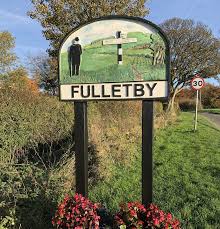
Belchford and Fulletby have formalised a long-term Neighbourhood Development Plan that will guide growth and land use across both villages through to 2041. The plan secured approval in a recent local referendum, with East Lindsey District Council confirming strong support among participating residents.

Cllr Tom Ashton, East Lindsey District Council portfolio holder for planning, said: “Creating a Neighbourhood Plan is a huge milestone for any community, and particularly so for smaller villages such as Belchford and Fulletby, and the successful local referendum shows that this has genuine local support.

“I am especially proud to have supported this process through East Lindsey’s Planning Policy Committee, particularly in ensuring the open space which means so much to people locally is properly protected.”

The document now forms part of the statutory planning framework for East Lindsey. It introduces policies intended to guide residential and commercial development to protect the villages’ rural setting. It outlines parameters for settlement density, building design, and site suitability to maintain alignment with the Lincolnshire Wolds’ status as a National Landscape and Area of Outstanding Natural Beauty.

Key elements include measures to safeguard historic assets, maintain open views, and retain designated green spaces. The plan also highlights the need for smaller homes to address local housing needs and sets expectations for low-impact development through a Dark Skies Policy that aims to limit light pollution.

Several community priorities have been identified to support amenity improvements and local sustainability initiatives. With the plan now adopted, the council will apply its guidance when assessing planning applications and shaping the area’s wider development strategy.

2026 Business Predictions: Shruti Trivedi, managing director, Devello

It’s that time of year, when Business Link Magazine invites the region’s business leaders to offer up their predictions for the year ahead.  It has become something of a tradition, given that we’ve been doing this now for over 30 years. Here we speak to Shruti Trivedi, managing director of property and planning law firm and strategic planning advisors Devello. The latest Budget has set the tone for what I believe will be another challenging year for the planning and development sector across the East Midlands and wider. While the headline focus has been on the targeted tax incentives and infrastructure spending, the deeper implications for the built environment should unfold throughout 2026. The East Midlands will receive a boost from initiatives like Team Derby, with £2 billion in transport funding and £100 million Local Growth allocation, while in the West Midlands the new £900 million Local Growth Fund will accelerate infrastructure like the Midlands Rail Hub. Whilst these policies are expected help unlock further commercial and residential development, ultimately I expect delivery to remain constrained by the planning system and the wider economy. The Government has renewed commitment to delivery through additional funding for local authority planning departments, providing £48 million over three years to recruit 350 planners and to establish a “Planning Careers Hub.” However, with skills shortages still lingering, I expect the bottlenecks that have constrained development to be slow to shift and delivery to remain uneven. Schemes will need to be well thought out with strong viability credentials. Overall, in 2026 planners and developers will have to adapt quickly to policy shifts, embrace more collaborative pre-application work and lean into the rising importance of sustainable place-making. While the year ahead may not deliver instant acceleration, it could lay the foundations for a more resilient and responsive planning landscape.

High street revival continues in Chesterfield as Tesco checks into former M&S store

0
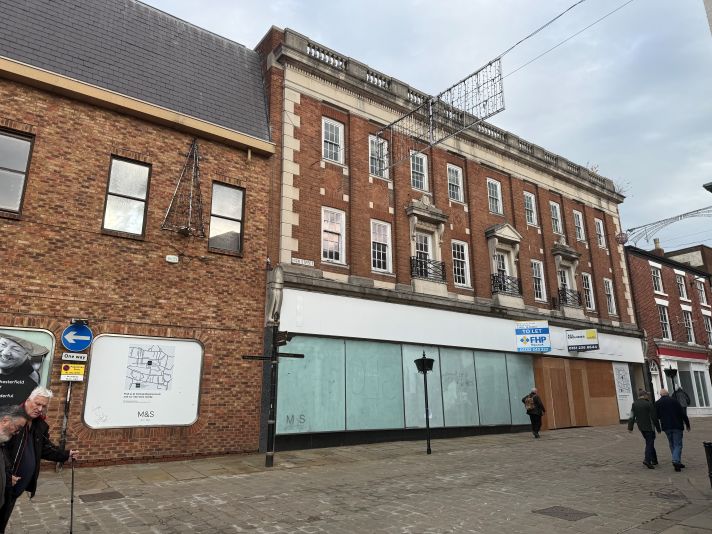
High street revival continues in Chesterfield after property developer ALB Group secured supermarket giant Tesco as the new tenant for the former Marks & Spencer building in the town centre. The building at 2-8 High Street has been vacant since M&S closed its doors in November 2022 after decades of trading. Now, the ground floor of the building has been split into three units with Tesco taking the central store. The 5,000 sq ft unit will now be transformed into a modern Tesco Express, bringing fresh investment to the town centre. The deal was brokered by Oliver Marshall of commercial property agency FHP, with ALB Group as the landlord. The handover to Tesco is expected to take place at the end of January 2026, on a 15-year lease. The landmark building next to the 800-year-old Market Place and opposite Primark, has been a familiar feature of Chesterfield’s main shopping thoroughfare for generations. Marks & Spencer relocated to Ravenside Retail Park in a move that had been rumoured for years prior. Arran Bailey, managing director for ALB Group, said: “This deal is another example of our commitment to breathing new life into key town and city centres across the UK. The former M&S site is in a prime location, and securing Tesco is a huge vote of confidence in Chesterfield’s high street. We’re delighted to play a part in supporting local employment and helping to re-energise this part of the city.” Oliver Marshall of FHP Property Consultants said: “The letting to Tesco adds to the revitalisation of the heart of the town and shows the continued appetite for well-positioned, quality retail space in busy high street locations. This unit is right in the heart of the city, surrounded by other strong retailers, and we’re confident it will perform extremely well.”

GIC expands product line and strengthens technical team

0

GIC has advanced its growth strategy with the release of two vertical form fill and seal (VFFS) machines and several technical appointments aimed at supporting wider sector demand.

“This is a very exciting time for GIC,” says Andy Beal, Managing Director. “I think it is fair to say that GIC is very well known in several sectors, such as fresh produce, frozen foods, leaf salad, and aggregates, and we’re pleased to say we work with some of the largest companies in those industries. Since Luke and I bought the business in 2006, we’ve worked hard to develop a range of vertical form fill and seal baggers that offer the highest possible quality, reliability and efficiency, and to provide excellent after-sales support to our customers.

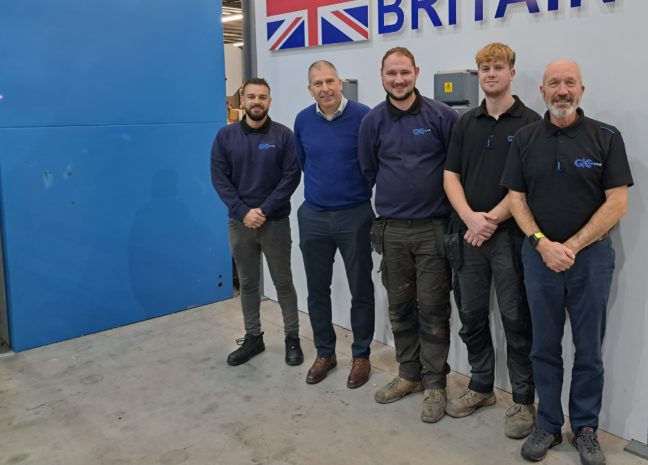
“We’ve always focused on working in the industries in which we have in-depth knowledge so that we can add value to our customers. Now, with the appointment of Steve, Adam and Nigel, our team has detailed and strategic knowledge of sectors such as coffee, pet food and hardware that were previously opportunistic for GIC. By designing our new pneumatic GIC200 and GIC400 range to provide solutions in these sectors, we’re very excited about seeing how this opportunity develops.”

The new GIC200 and GIC400 models broaden the company’s packaging portfolio with options suited to lower-speed production lines and early-stage automation. Both systems are designed for manufacturers seeking a cost-effective route into automated bagging, with applications spanning coffee, snacks, hardware, powders, pulses, pet food, and fresh foods.

The GIC200 offers intermittent-motion operation with motorised film feed and accommodates pack widths from 30mm to 250mm. The GIC400 provides a larger format capability at 400mm. Each model uses Rockwell Allen Bradley controls and a mechanical design intended to support reliability and manageable operating costs.

To support market expansion, GIC has added new expertise across applications, field service, and customer support. Recent hires bring experience in VFFS technology, sector-specific packaging requirements, and equipment maintenance. The company has also absorbed the support function for Cotswold linear weighers following the acquisition of the related intellectual property, stock, and spare parts from Cotswold Mechanical Ltd.

These developments position GIC to engage more closely with manufacturers seeking flexible automation options and integrated weighing solutions.